
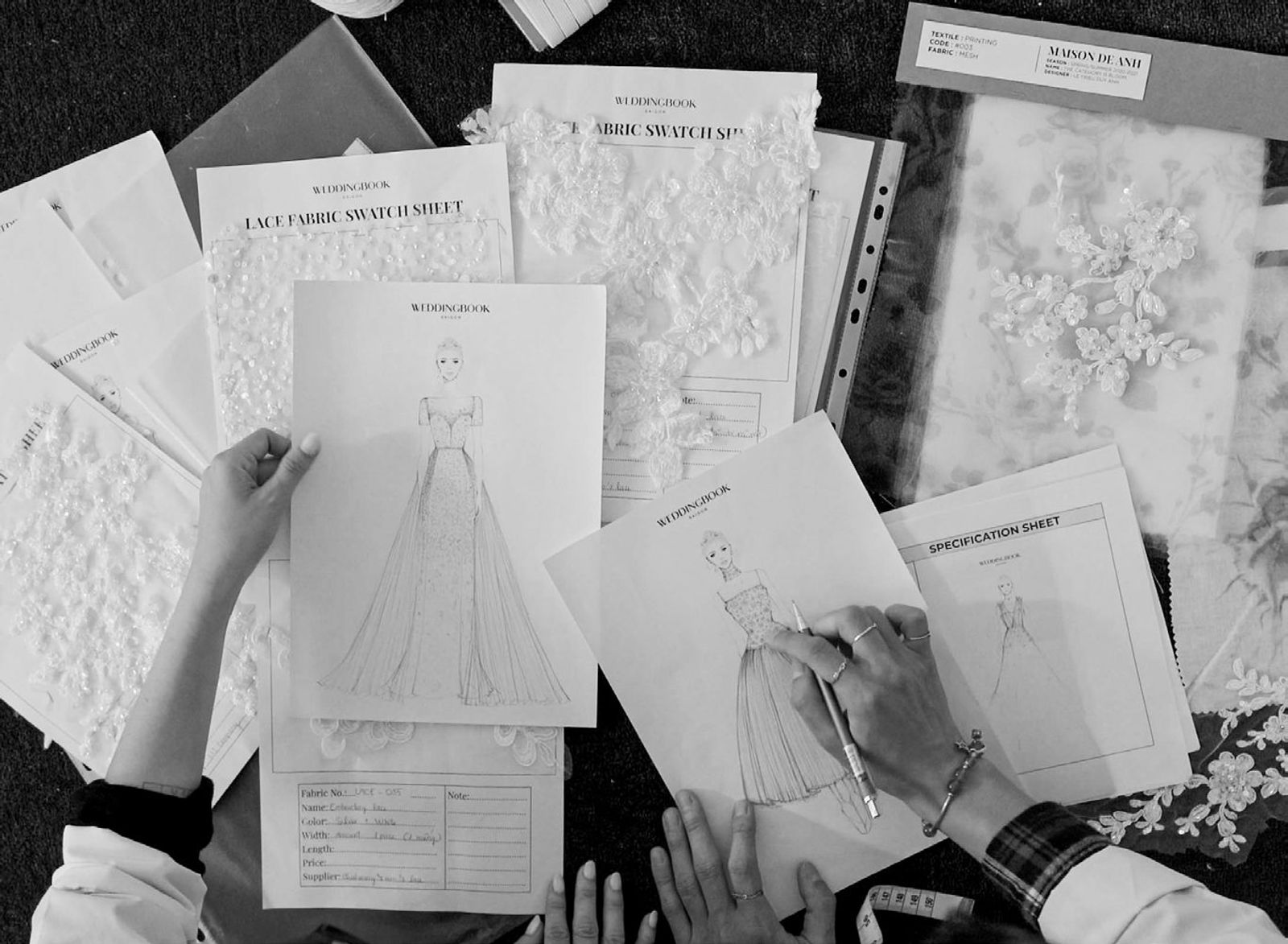
When a bridal brand starts looking for a wedding dress manufacturer, two terms appear in almost every conversation: OEM and ODM. They describe the same factory work, but they start from a different place. In OEM, the design comes from your brand. In ODM, the design is developed by the manufacturer's design team from your idea. Understanding the difference early helps you plan your timeline, your design workload, and how distinctive your collection will be.
What is OEM for wedding dresses?
OEM stands for original equipment manufacturer. In bridal, it means the atelier produces gowns to your design. You bring the design itself: 2D pattern files and design specifications, or a physical sample that the atelier can turn into a pattern. The atelier then makes the sample and produces the finished gowns. Your brand owns the design and decides every detail.
OEM suits brands that already have a designer and patterns, or a sample they want to reproduce faithfully.
What is ODM for wedding dresses?
ODM stands for original design manufacturer. Here you bring an idea or mood references, and the atelier's design team develops the design for you. At WEDDINGBOOK ATELIER, the team prepares sketches or AI concept visuals for your review. Once the direction is confirmed, we prepare a work order list and move to sampling. You then sell the result under your own brand.
ODM suits brands that want to launch or expand a range without building a full design team, or that want to test a new category with less development work on their side.
OEM vs ODM at a glance
- Where the design starts: OEM starts with your design. ODM starts with your idea, developed by the atelier's design team.
- What you provide: For OEM, 2D pattern files and design specifications, or a physical sample. For ODM, an idea or mood references.
- Creative control: OEM gives you full control. ODM is shared: you review and refine the concepts the design team prepares.
- Development workload: Higher on your side for OEM, lower for ODM.
- Best for: OEM suits brands with design resources and patterns. ODM suits brands that want to move quickly or extend their range.
How to choose
A few questions usually settle it:
- Do you already have patterns or a sample to reproduce? Lean toward OEM.
- Are you starting from an idea or mood references? Lean toward ODM.
- Do you need a collection ready quickly, or want to add styles without more design work? Lean toward ODM.
- Is design confidentiality a concern? A standard NDA protects the confidentiality of your designs.
Many brands use both: ODM for the core range, and OEM for a few signature gowns.
What both models share
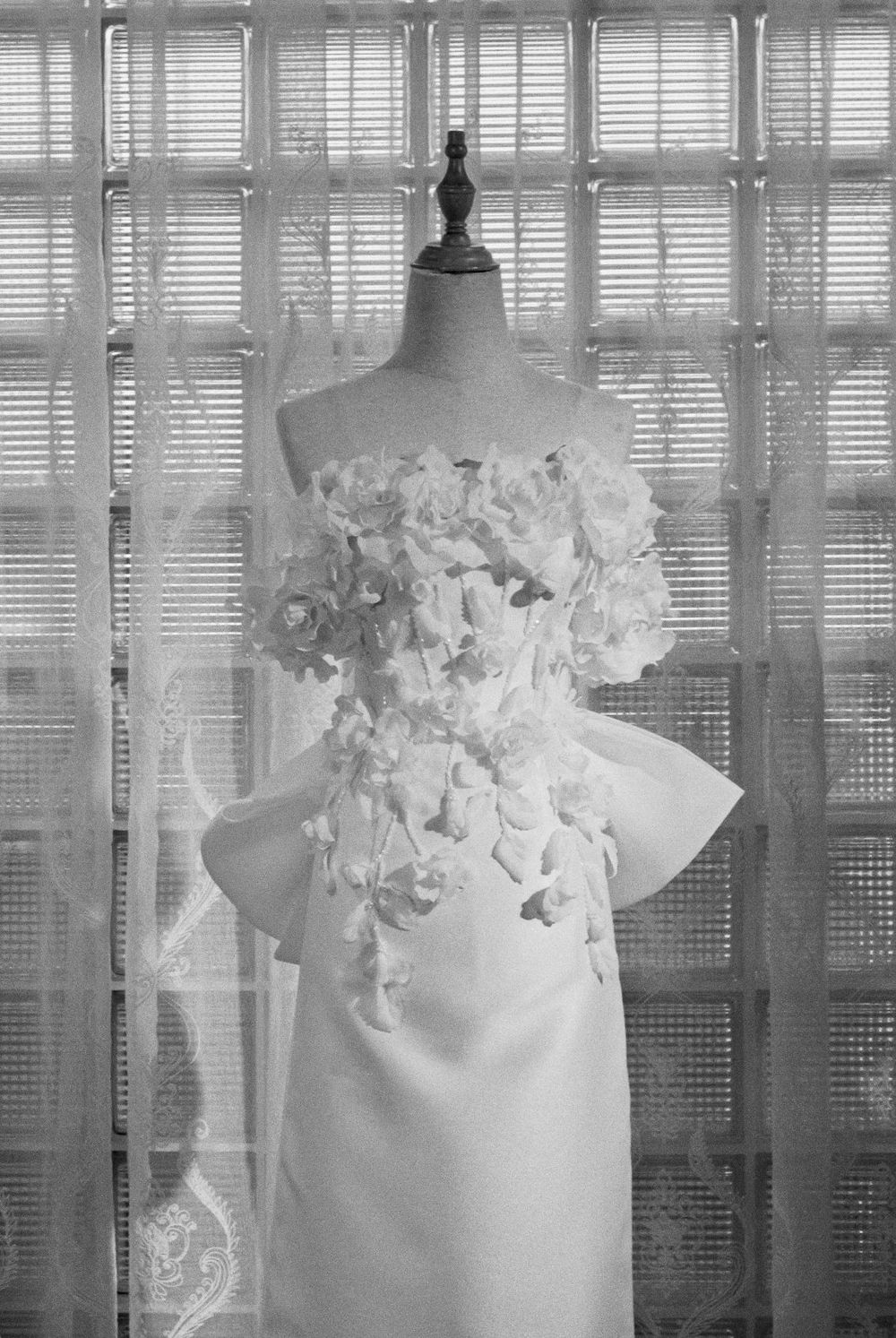
Whichever model you choose, the process after the brief is similar. The atelier makes a sample so you can check fit, fabric, and detail. You approve the sample before production starts. Production follows, and we provide woven labels, care labels, hang tags, and garment bags under your own brand name.
OEM and ODM at WEDDINGBOOK ATELIER
WEDDINGBOOK ATELIER is an OEM and ODM atelier in Ho Chi Minh City, producing wedding gowns for bridal houses across the United States, Japan, Korea, Europe, and the Middle East. Sampling, cutting, beading, and finishing all happen in-house at our own atelier, so one team follows your gown from first brief to finished piece. When an order exceeds the capacity of our in-house atelier, we may also work with partner facilities to keep operations and production stable. Small runs are welcome, which makes both models practical for a first collection.
Read more about our OEM and ODM service, or tell us about your project.