
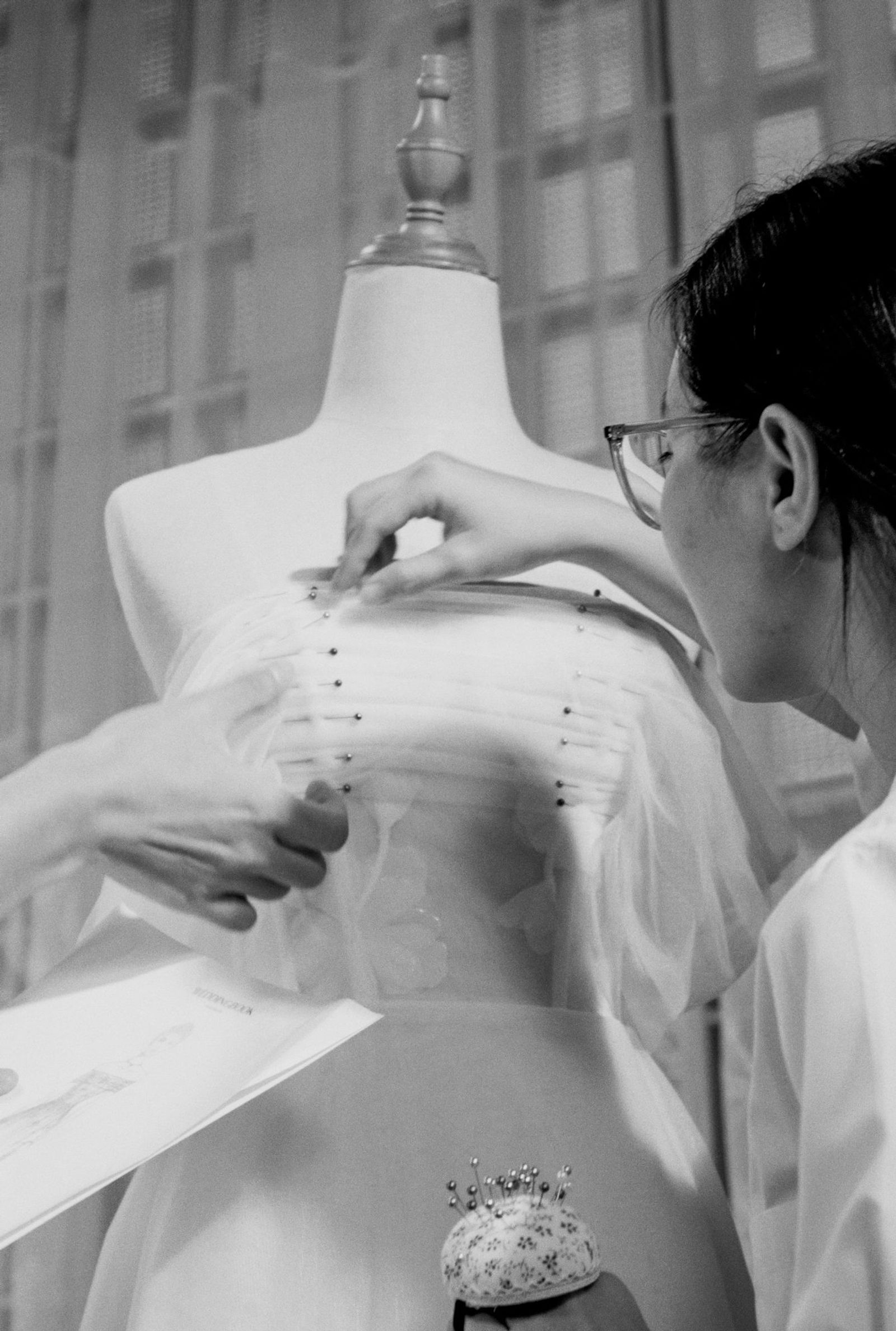
Launching a bridal line is exciting, and the production side is easier to plan when you know the steps. This guide walks through working with a wedding dress manufacturer in Vietnam, from your first brief to shipped gowns.
Step 1: Define your concept and customer
Before you contact any manufacturer, be clear about who the collection is for and what it should feel like. Decide the silhouettes, the level of detail, and the fabrics you want to feature. A focused first collection with a small number of styles is easier to sample, fit, and sell than a large one.
Step 2: Choose OEM or ODM
If you bring your own design, you are looking at OEM. If you start from an idea and want the atelier's design team to develop it, that is ODM. Our guide to OEM vs ODM wedding dresses explains the difference and how to choose.
Step 3: Prepare what to send
What you send depends on the model:
- OEM: 2D pattern files and design specifications, or a physical sample that the atelier can turn into a pattern.
- ODM: an idea or mood references. The design team prepares sketches or AI concept visuals for you to review.
For both models, it also helps to share fabric, lace, and trim direction, your size range and fit notes, the quantity you expect per style, and your target delivery date.
You do not need everything to be perfect. Send what you have and ask the atelier what else it needs.
Step 4: Sampling
The sample is where your design becomes a real gown. Plan on about four weeks for sampling, and up to eight weeks depending on the fabric, lace, and handwork involved.
The sample fee is calculated at two to three times the production unit price. It depends on the fabric and manufacturing resources, and it is confirmed in your quote. Samples are paid in full before work starts, and part of the fee is credited when you place a production order.
Use this stage to check fit, fabric, and detail, and to request corrections. Approve the sample only when you are happy with it, because production follows the approved sample.
Step 5: Production
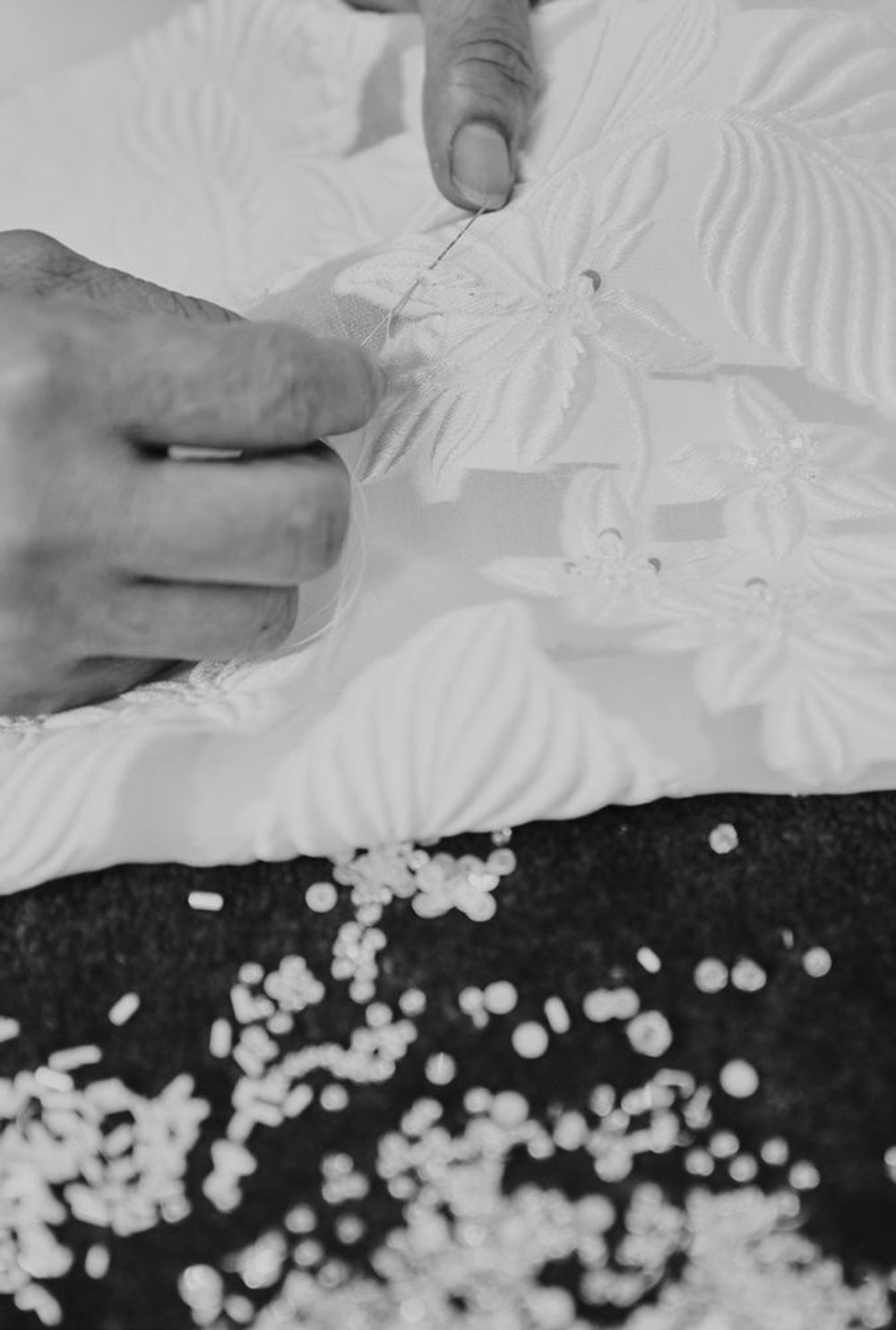
After sample approval, production typically takes about 30 days. Small runs are welcome, and the minimum quantity depends on the style and fabric. It typically starts from a few pieces per style, so a first collection does not require a large commitment. To start production, a 50% deposit is paid, and the balance is due before shipment.
Step 6: Labels, packaging, and shipping
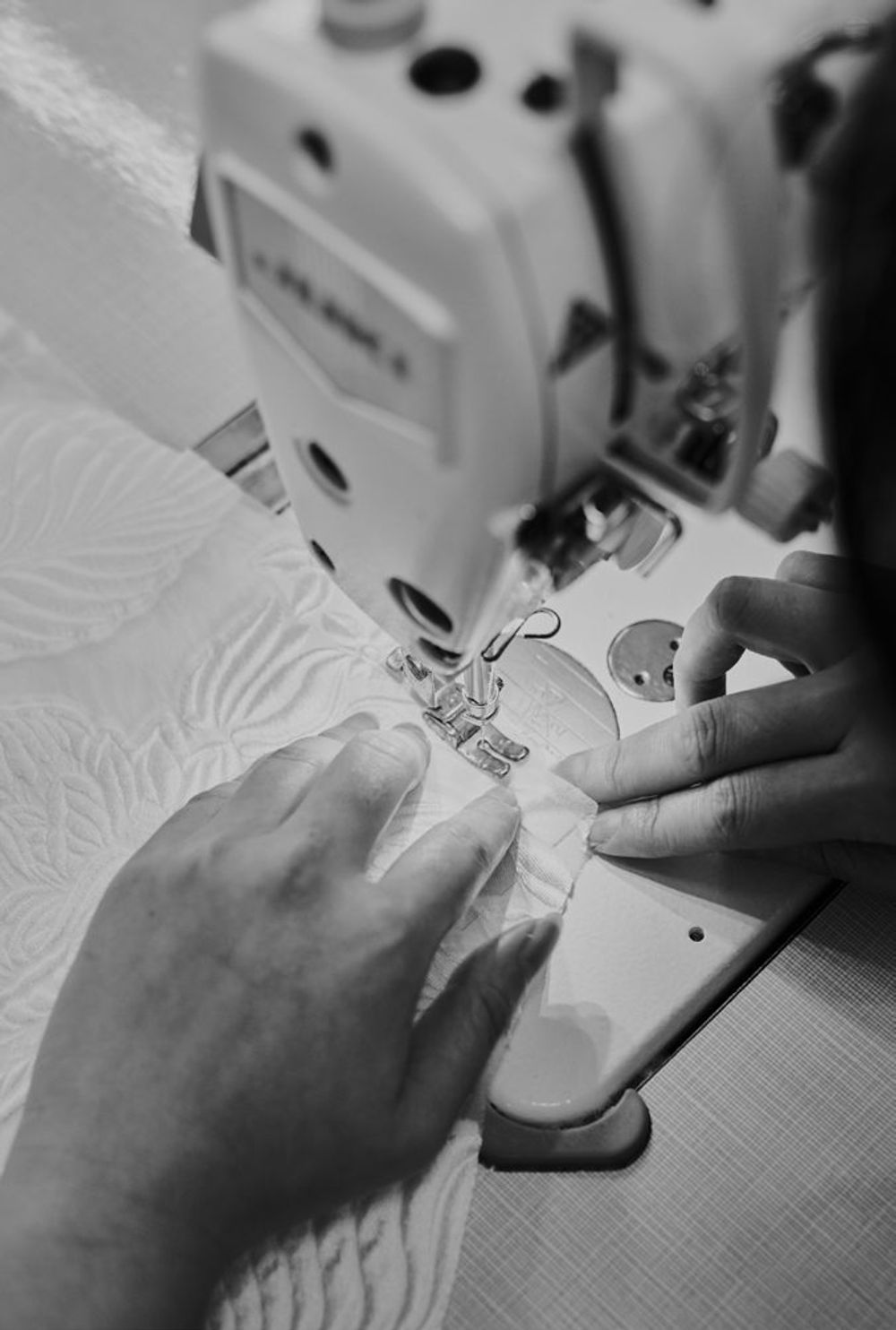
We provide woven labels, care labels, hang tags, and garment bags under your own brand name, and a standard NDA protects the confidentiality of your designs. Freight is quoted through our logistics partners. Our standard terms are FOB, and CIF or DDP are available depending on the order. If you have a designated forwarder, we work with them.
Common mistakes to avoid
- Launching with too many styles at once. Start with a focused capsule and expand.
- Approving a sample without checking the fit on the size you will sell most.
- Leaving fabric and lace references vague. Swatches save time.
- Planning back from your launch date too late. Build in time for sampling, corrections, production, and shipping.
Why work with an atelier in Ho Chi Minh City
At WEDDINGBOOK ATELIER, sampling, cutting, beading, and finishing all happen in-house, and our own line is known for hand-appliquéd florals and romantic ballgown silhouettes. When an order exceeds the capacity of our in-house atelier, we may also work with partner facilities to keep operations and production stable. We work with bridal houses in the United States, Japan, Korea, Europe, and the Middle East.
Ready to plan your first collection? Read about our sample making and manufacturing services, or contact us. We reply within one business day.